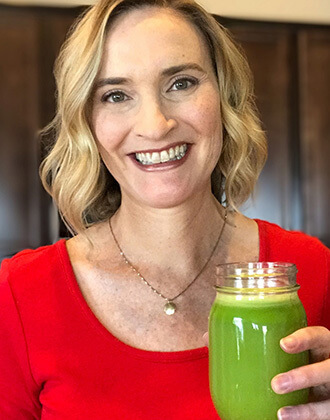

A client holds up a bottle of green juice and asks, “Does this actually work?” Your answer should never be a slogan, a dramatic before-and-after story, or a recitation of nutrient facts without context. To explain juicing evidence well is to help people understand what research can tell us, what it cannot yet tell us, and how a thoughtful juicing practice may fit within a broader pattern of food, lifestyle, and professional health support.
For wellness professionals, this is not a minor communication skill. It is the difference between repeating wellness marketing and leading with credibility. Clients deserve clear education. You deserve the confidence to offer it without overstating a claim or retreating into vague language.
What It Means to Explain Juicing Evidence
Evidence-informed practice is not about finding one study that appears to settle every question. It is a disciplined way of making decisions and communicating responsibly. It brings together the best available research, relevant nutrition principles, practical experience, client preferences, and appropriate professional boundaries.
Juicing has a straightforward nutritional foundation: fruits and vegetables contain vitamins, minerals, and a wide range of plant compounds. Juicing can make it convenient for some people to include a greater variety of produce, especially when preparation, appetite, travel, or taste preferences create barriers. That convenience can be meaningful, but it is not a universal answer and it does not make juice nutritionally identical to whole produce.
When fruits and vegetables are juiced, much of their fiber is removed or reduced, depending on the juicer and ingredients. Whole foods remain essential because fiber contributes to fullness, digestive regularity, and the overall structure of a balanced eating pattern. A credible educator does not frame juice versus whole foods as a contest. Instead, they explain how each can serve a useful role.
The strongest language is often the most accurate: a vegetable-forward juice may help someone add variety to their produce intake; it can be a practical component of a nourishing routine; and its value depends on the person’s overall dietary pattern, goals, ingredients, portion, and health context.
Start With the Question Behind the Question
“Does it work?” can mean many different things. A client may be asking whether juicing is worth the time, whether it supports their energy and routines, whether a particular ingredient has been studied, or whether juice can address a medical concern. Those questions require different answers.
Before offering education, clarify the client’s goal. Ask what they hope to gain from juicing and what their current food pattern looks like. A person who rarely eats vegetables may benefit from a simple, realistic way to practice including more produce. Another person may already eat abundant whole plants and simply enjoy fresh juice as an occasional addition. Neither needs a sweeping promise.
This approach also protects ethical boundaries. Wellness professionals can educate clients about food choices and supportive habits. They should not diagnose conditions, promise outcomes, or position juicing as a replacement for medical care. When a client has a medical condition, is pregnant, takes medication, or has concerns about blood sugar, kidney function, food safety, or nutrition adequacy, encourage them to consult an appropriately qualified healthcare professional.
Read Research Beyond the Headline
A study title can sound more decisive than the study itself. Professional confidence comes from asking better questions before translating research into client education.
Consider the type of evidence
Different forms of evidence answer different questions. Laboratory and animal studies may help researchers explore mechanisms, but they do not automatically predict what will happen in people. Observational studies can identify associations between dietary patterns and health outcomes, yet they cannot prove that one food or behavior caused the outcome.
Human clinical trials can provide more direct information, especially when they are well designed and compare meaningful interventions. Still, a single trial is rarely the final word. Systematic reviews and meta-analyses can be useful because they assess a body of research, though their value depends on the quality and consistency of the studies included.
The practical lesson is simple: match the strength of your language to the strength of the evidence. “Research suggests,” “may support,” and “has been associated with” are not weak phrases. They are signs of professional precision.
Look at what was actually studied
A study on a standardized powder, extract, or isolated compound is not necessarily evidence for a fresh juice recipe. Likewise, research involving a specific population, dose, or duration may not apply broadly to every client.
Ask: What ingredients were used? How much was consumed? Was the intervention fresh juice, a whole-food dietary pattern, or a supplement? Who participated, and for how long? What outcome did researchers measure? These details help prevent an all-too-common leap from an interesting finding to an oversized claim.
Separate nutrients from outcomes
It is reasonable to explain that leafy greens, citrus, beets, berries, and other produce contribute distinct nutrients and plant compounds. It is not reasonable to assume that listing those nutrients proves a specific health result for everyone who drinks them.
Food works within a dietary pattern and a real life. Sleep, movement, stress, medication, access to food, cooking habits, and consistency all matter. Juicing education becomes more useful when it acknowledges that bigger picture.
Translate Evidence Into Practical Guidance
Clients do not need a research seminar every time they make juice. They need clear principles they can use. A practical starting point is to encourage vegetable-forward recipes, variety across the week, and portions that suit the individual rather than an arbitrary rule.
For many people, pairing juice with a meal or snack can make it feel more integrated into the day than using it as a stand-alone substitute for regular eating. Including whole fruits and vegetables elsewhere in the day helps preserve the benefits of fiber and eating satisfaction. Freshly prepared juice also requires sound food-handling practices: wash produce, clean equipment thoroughly, refrigerate juice promptly, and follow extra caution when food safety is a concern.
You can also teach clients to evaluate how a habit functions in their lives. Is juicing helping them enjoy more vegetables? Is it financially and practically sustainable? Does it complement meals rather than displace them? Does it create a routine they can maintain with pleasure? These questions move the conversation from hype to agency.
Use Language That Builds Trust
The words a wellness professional chooses shape the client’s expectations and their trust. Compare these two statements:
“A green juice flushes toxins and fixes low energy.”
“A green juice can be a refreshing way to include leafy vegetables and other produce. Let’s look at how it fits with your meals, hydration, sleep, and daily routine.”
The second statement may feel less dramatic, but it is more useful. It gives the client an actionable next step without suggesting that a beverage can solve a complex concern. It also opens the door to coaching, observation, and individualized education.
At Juice Guru Institute, this standard of communication is central to professional development. Therapeutic juicing education should strengthen a practitioner’s ability to assess context, explain principles clearly, and create supportive client experiences grounded in integrity.
When the Evidence Is Limited or Mixed
Not every popular juicing claim has strong human evidence behind it. When research is early, mixed, indirect, or absent, say so plainly. You do not need to dismiss the client’s interest, and you do not need to invent certainty to sound knowledgeable.
A helpful response might be: “There is interest in this ingredient, but the evidence does not let us make a firm promise. If you enjoy it and it works within your overall food plan, we can focus on what is well established: increasing produce variety, building consistent meals, and choosing habits you can sustain.”
That is not a lesser form of coaching. It is leadership. Ethical language protects clients from disappointment and helps establish your reputation as a professional who can distinguish possibility from proof.
Make Evidence a Living Practice
The ability to explain juicing evidence is not a script to memorize. It is an ongoing practice of reading carefully, questioning confidently, and communicating with care. New research may refine what we know. Individual clients will bring different needs, resources, and preferences. Your role is to remain curious without becoming credulous, and encouraging without making promises.
The most influential wellness professionals are not those who make the loudest claims. They are the ones who help people make informed, realistic choices and return to those choices with confidence. That kind of education creates impact that lasts far beyond a single glass of juice.