A memorable juicing lesson does more than demonstrate how to feed produce into a machine. It gives learners a practical framework for making thoughtful choices, understanding the role of juice within whole-person wellness, and applying what they learn with confidence. Knowing how to create juicing lessons at this level is what separates casual information-sharing from professional education.
For wellness professionals, the opportunity is significant. Clients and communities are looking for guidance that feels encouraging, grounded, and realistic. They do not need grand promises. They need clear education, useful skills, and an instructor who respects both the potential and the limits of therapeutic juicing.
Begin With a Clear Educational Outcome
Strong lessons start with a decision: what should learners be able to understand or do when the session ends? “Learn about juicing” is too broad to guide your teaching. A better outcome might be helping participants build a balanced vegetable-forward juice, explain safe food-handling practices, or develop a realistic routine for incorporating fresh juice into a varied eating pattern.
This focus keeps your lesson purposeful. It also prevents a common problem in wellness education: trying to cover ingredients, equipment, recipes, nutrition concepts, and lifestyle coaching in one rushed presentation. A beginner workshop and a professional training module should not carry the same expectations.
Consider the learner’s starting point. A juice bar team may need efficiency, consistency, and customer communication. A group of new wellness clients may need foundational confidence around produce selection and preparation. Health coaches may benefit most from learning how to discuss juicing within ethical scope, without drifting into medical guidance.
Build Juicing Lessons Around a Repeatable Structure
When you create juicing lessons, use a structure that learners can recognize and apply again. A reliable session often moves from context to demonstration, then from practice to reflection.
Start by establishing the lesson’s purpose. Explain what the group will learn and why it matters in everyday wellness education. Then introduce the key concept, such as balancing flavor, selecting seasonal produce, or preparing ingredients safely. Keep the explanation focused enough that participants can remember it without needing a dense packet of notes.
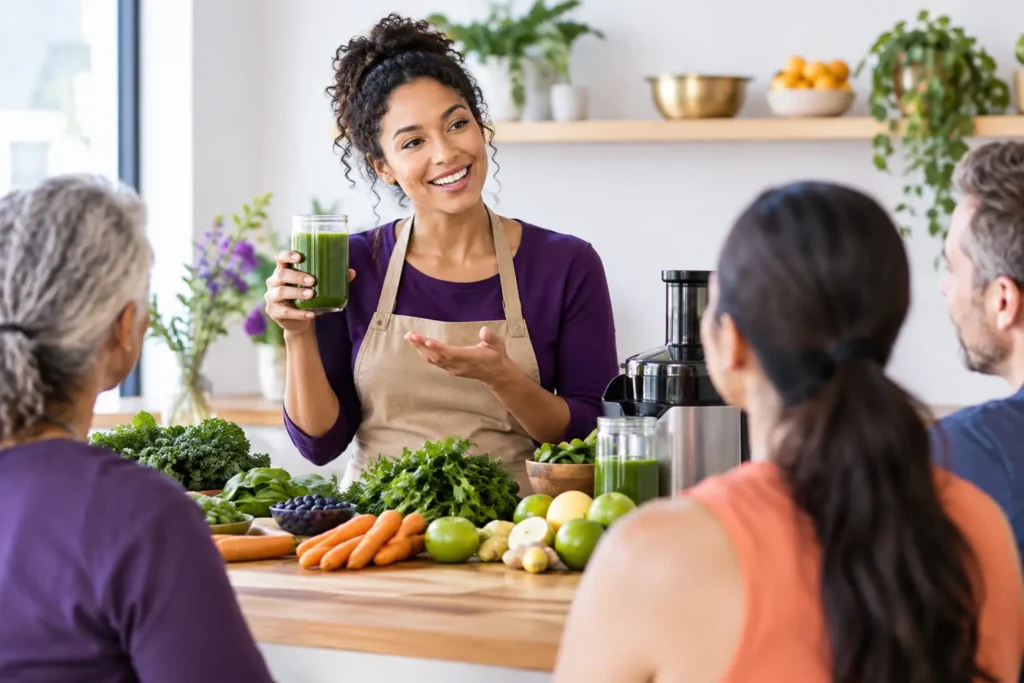
The demonstration is where information becomes tangible. Show learners how you wash, trim, store, and juice ingredients, while naming the reasoning behind each choice. For example, explain how a cucumber can add volume and hydration to a recipe, while leafy greens may bring a more pronounced flavor and require thoughtful pairing. Avoid presenting any ingredient as a cure or a substitute for appropriate medical care.
Next, create a moment for application. Learners might assemble a recipe from a defined ingredient list, compare two flavor profiles, or practice explaining a juice’s ingredients in plain language. Reflection closes the loop. Ask what felt achievable, what surprised them, and what small action they are prepared to take next.
Teach Principles, Not Just Recipes
Recipes are helpful, particularly for beginners. But recipes alone can leave learners dependent on exact instructions. A well-designed lesson teaches the principles that help someone adapt when a favorite ingredient is unavailable, a client dislikes a flavor, or a season changes.
One useful principle is balance. Encourage learners to think about the relationship among vegetables, fruits, herbs, and flavor-forward additions such as ginger or citrus. This is not about declaring one formula perfect for everyone. It is about helping people make intentional choices based on taste, accessibility, and their individual context.
Another principle is practicality. A beautiful juice recipe that requires ten uncommon ingredients may be inspiring, but it may not fit a busy family, a small business, or a beginner’s budget. Include options for simplifying the recipe while preserving the learning goal. This signals respect for the reality of daily life and makes your teaching more usable.
You can also teach learners to evaluate recipes with thoughtful questions: Is this preparation method manageable? Are the ingredients familiar? How does this fit alongside balanced meals and appropriate professional care? These questions build discernment, which is one of the most valuable outcomes of a wellness lesson.
Make Food Safety and Scope Part of the Lesson
Professional credibility is built in the details. Food safety should not be an afterthought added at the end of a class. Include produce washing, clean equipment, proper storage, and timely refrigeration as normal parts of your demonstration. Learners should see that careful preparation is part of responsible practice.
Scope is equally important. Juicing educators can offer education, encouragement, recipe guidance, and general wellness support. They should not diagnose conditions, prescribe treatment plans, or advise participants to change medications. If a learner has a medical condition, is pregnant, takes medication, or has concerns about dietary changes, encourage them to consult an appropriately qualified healthcare professional.
This approach does not make a lesson less inspiring. It makes it more trustworthy. People can feel the difference between an educator who overpromises and one who is prepared to teach with confidence, care, and clear boundaries.
Design for Participation, Not Performance
The best juicing lessons do not depend on the instructor being the most charismatic person in the room. They create participation. Instead of speaking for an hour and offering samples at the end, invite learners to observe, smell, taste, compare, and ask questions throughout the session.
Use sensory learning deliberately. Ask participants to identify what changes when lemon is added to a green juice, or how the aroma of fresh herbs affects their expectations before tasting. These small moments make education memorable without turning the lesson into entertainment alone.
It also helps to normalize varied preferences. Some people enjoy bold greens immediately; others need a gentler entry point. A participant may have limited time, limited access to produce, or a household with different tastes. Meet those realities with options rather than judgment.
For virtual lessons, participation may look different but remains essential. Demonstrate steps clearly on camera, provide a concise ingredient list in advance, pause for questions, and give learners a simple task to complete in their own kitchen. The goal is not perfection on screen. The goal is an experience participants can carry into real life.
Create Materials Learners Will Actually Use
Supporting materials should reinforce the lesson, not overwhelm it. A one-page recipe framework, a produce-prep checklist, or a short reflection prompt is often more valuable than a lengthy handout filled with nutrition claims.
Use plain, accurate language. If you reference nutrition, distinguish between general education and individualized advice. Cite or teach from evidence-informed principles when appropriate, but translate them into language your audience can understand and use.
For professionals building a practice, materials can also support continuity. A follow-up note might invite participants to repeat one recipe, record what they noticed, and bring questions to the next session. This creates a learning relationship rather than a one-time event.
At Juice Guru Institute, professional education is grounded in this larger view: therapeutic juicing education is not simply about what goes into the glass. It is about preparing practitioners to communicate responsibly, support lasting behavior change, and bring meaningful skills to the communities they serve.
Evaluate the Lesson and Improve It
Every lesson is an opportunity to refine your teaching. Afterward, ask whether participants achieved the intended outcome. Did they leave able to apply a principle, or did they only enjoy a sample? Were your instructions clear? Did the pace allow for questions and practice?
Feedback can be simple. Ask learners which part felt most useful, where they wanted more clarity, and what they expect to try during the next week. Their answers will reveal whether you need to simplify the material, add more hands-on practice, or better define the lesson’s boundaries.
For business owners and educators, evaluation also protects quality as you grow. A lesson that works beautifully for six people may need different equipment, timing, or support materials for a larger group. Standardizing your core framework while adapting the examples for each audience helps you deliver a consistent, professional experience.
A well-crafted juicing lesson gives people more than a recipe to take home. It gives them a clearer way to think, choose, and participate in their wellness journey – and it gives you a credible foundation for leading with service, skill, and purpose.