A memorable juicing class is not built around the most colorful recipe. It is built around a clear promise: participants leave knowing what to do next, why it may fit their wellness goals, and where the boundaries of responsible guidance belong. Learning how to plan juicing classes with that level of intention can help you become a more trusted educator, strengthen your professional identity, and create a meaningful point of entry to your broader wellness services.
For aspiring juice educators, the opportunity is real. People want practical ways to include more fresh produce in their routines, but they also need instruction that feels grounded, welcoming, and realistic. Your role is not to make sweeping promises. It is to translate sound wellness principles into an experience participants can use in their own kitchens.
Begin With One Clear Class Outcome
A common mistake is trying to teach everything about juicing in one session. Ingredient selection, equipment, food safety, recipe formulation, wellness education, and business promotion all matter. But a class with too many objectives can leave people inspired yet unsure what they actually learned.
Start by defining one primary outcome. A beginner class may help participants confidently make two balanced vegetable-forward juices and understand how to adapt them for taste. A class for busy professionals may focus on planning produce purchases and preparing ingredients for the week. A session for wellness professionals may explore how to speak about juicing responsibly within their existing scope of practice.
Write the outcome as a participant statement: “By the end of this class, participants will be able to…” This small step guides every decision that follows. It tells you which recipes belong, how much equipment you need, and what information can wait for a future workshop.
The best outcome depends on your audience. A community center group may need a friendly introduction to juicers and flavor combinations. A yoga studio audience may be ready for a more intentional conversation about mindful routines. A juice bar workshop might emphasize seasonal ingredients and practical menu inspiration. Do not assume one format serves everyone equally.
How to Plan Juicing Classes Around Your Audience
Before selecting recipes, learn who will be in the room. Consider their experience level, budget realities, equipment access, dietary preferences, and reason for attending. A person who owns a juicer but rarely uses it needs a different learning experience than a first-time participant deciding whether juicing is practical for their household.
A short registration questionnaire can reveal useful details. Ask what participants hope to learn, whether they have ingredient allergies or sensitivities, and whether they have access to a juicer at home. Keep questions relevant and avoid collecting health information you do not need to run the class safely.
Then choose a class size that supports the experience you want to offer. A demonstration can work well for a larger audience, especially when visibility is good and recipes are simple. Hands-on instruction usually calls for smaller groups, enough workstations, and a realistic plan for cleanup. A hybrid format often works beautifully: demonstrate one foundational technique, then let small groups prepare a recipe under your guidance.
Your teaching environment should reinforce accessibility. Use readable recipe cards, clear labels, and plain language. Explain unfamiliar ingredients without making participants feel behind. If you are working with a mixed-experience group, offer optional extensions for confident learners while keeping the core lesson approachable.
Build a Curriculum, Not Just a Recipe Demo
Recipes are useful teaching tools, but they are not the curriculum. A well-planned class helps people understand the decisions behind the recipe: why produce is washed and stored carefully, how flavor can be adjusted without relying on excessive sweetness, and how to use ingredients thoughtfully.
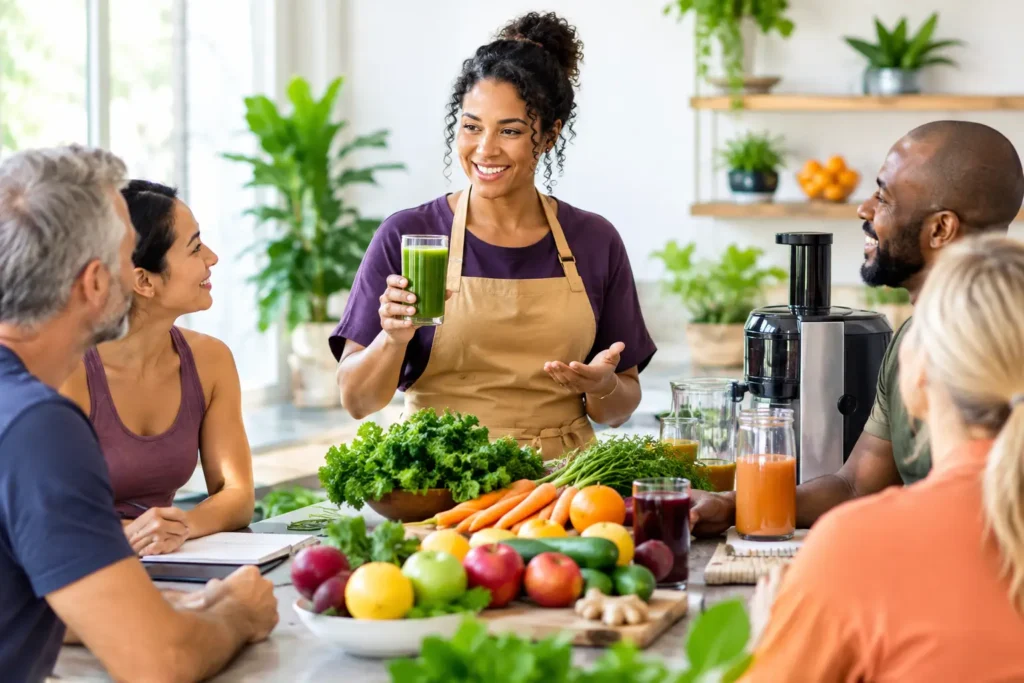
A 60- to 90-minute class often has room for four parts: a welcome and orientation, a focused teaching segment, a live or hands-on preparation experience, and a practical close. The pace matters. Participants need time to watch, ask questions, taste, and connect the lesson to their lives.
For example, a foundational class could begin with a brief discussion of what juicing is and where it can fit within a balanced, whole-food lifestyle. From there, demonstrate safe produce handling and juicer operation. Prepare one approachable green juice and one brighter, more familiar blend, then invite participants to compare flavor profiles. Close by helping them identify a simple next step, such as choosing one recipe to make at home that week.
Avoid turning the class into a lecture loaded with nutrition claims. You can speak confidently about food, flavor, hydration habits, and practical preparation without implying that juice cures, treats, or prevents health conditions. When a participant raises a question that falls outside your professional scope, acknowledge it respectfully and encourage consultation with an appropriate licensed health care professional.
This boundary does not weaken your teaching. It strengthens trust. Ethical educators know what they can teach, what they should not claim, and when individualized concerns require another professional’s input.
Plan Ingredients, Equipment, and Food Safety Early
The most polished lesson can unravel when the produce is bruised, the juicer is difficult to clean, or half the room cannot see the demonstration. Create an operations checklist well before the event.
For ingredients, calculate portions based on your class format. A tasting demonstration requires less produce than a hands-on workshop in which each participant makes a full serving. Buy a modest amount of extra produce for yield differences and unexpected attendance, but do not overbuy highly perishable items. Seasonal ingredients can lower costs and give your class a timely, local feel.
Test every recipe with the exact equipment you will use. Yield, texture, and cleanup vary significantly among juicer types. If participants may use centrifugal, masticating, or blender-based methods at home, explain the practical differences without suggesting that one tool is universally right for every person. The best equipment is often the one a participant can use consistently and maintain safely.
Food safety deserves visible attention, not a rushed disclaimer. Provide handwashing access, sanitize preparation surfaces, wash produce appropriately, and use separate equipment for allergen-sensitive preparations when needed. Keep perishable ingredients properly chilled and establish a cleanup plan before the class begins. These details communicate professionalism as clearly as your teaching does.
Create an Experience Worth Talking About
People remember how a class made them feel. They may forget the exact amount of cucumber in a recipe, but they will remember whether they felt capable, welcomed, and respected.
Set the tone from the beginning. Explain what participants will learn, invite questions, and make it clear that no one needs prior expertise. During the class, narrate your choices rather than performing silently. Share practical substitutions, storage suggestions, and realistic ways to use leftover pulp where appropriate. Encourage tasting and reflection: What flavors work? What would make this more sustainable in a weekday routine?
A simple take-home resource can extend the value of the session. Include the recipes, a produce shopping guide, equipment-cleaning reminders, and a few prompts for building a personal juicing habit. Keep it focused. An overloaded packet is less likely to be used than a concise guide with a clear next action.
If you offer coaching, future workshops, or professional services, mention them as an invitation rather than a pressure point. The class should stand on its own as a valuable educational experience. Trust grows when participants feel they received genuine guidance before they are asked to take another step.
Price and Promote With Professional Clarity
Your price should reflect more than ingredients. Account for planning time, shopping, preparation, travel, venue fees, equipment, insurance, printed materials, cleanup, and your expertise. A free introductory class can be appropriate for a strategic partnership or community outreach effort, but it should still be planned with the same care as a paid program.
When promoting the class, lead with the practical transformation. Tell people whether it is hands-on or demonstration-based, who it is designed for, what they will make or taste, and what they will take home. Be specific about time, location, accessibility, and what is included. Clear expectations improve attendance and reduce last-minute confusion.
Your marketing language should reflect the standards you want your professional work to represent. Avoid exaggerated wellness promises. Instead, communicate the value of informed instruction, practical skills, and a supportive learning environment. This positions you as an educator, not simply someone sharing recipes online.
Evaluate, Refine, and Build Your Signature Format
After each class, ask participants what was most useful, what felt unclear, and what they would like to learn next. Observe where the group needed more time. Did the equipment demonstration create questions? Did participants need more support adapting recipes to their preferences? Did the room setup make hands-on work difficult?
Use those insights to refine your format. Over time, you may develop a series: Juicing Foundations, Seasonal Juice Lab, Juicing for Busy Routines, or a professional workshop on ethical wellness communication. A repeatable class structure helps you deliver quality consistently while leaving room for seasonal creativity and the needs of each audience.
At Juice Guru Institute, we believe specialized education helps wellness professionals bring greater confidence, credibility, and care to their communities. Your class can be more than a pleasant afternoon around fresh produce. With thoughtful planning, it can become a place where people feel capable of making a small, nourishing change – and where your leadership begins to make a lasting difference.