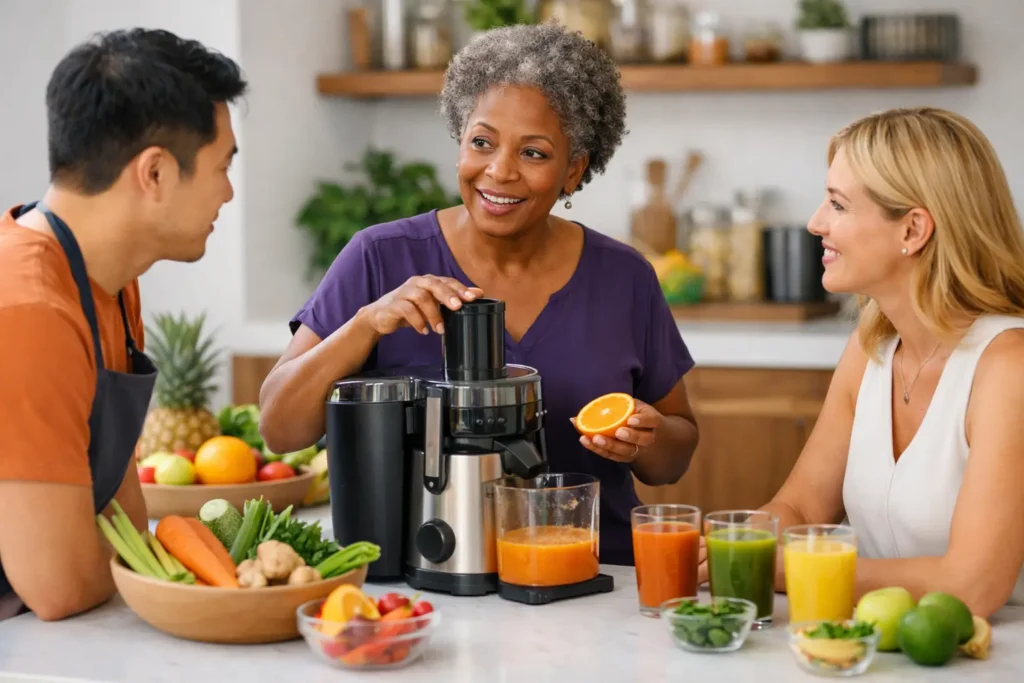
A client may arrive enthusiastic about a fresh juice routine, yet enthusiasm is not a substitute for sound education. Knowing how to teach juicing safely means helping people make practical, informed choices while honoring the limits of your professional role. It is the difference between sharing a recipe and leading an ethical, confidence-building wellness conversation.
For wellness professionals, safety is not a disclaimer added at the end of a session. It is built into how you assess readiness, communicate benefits without overpromising, demonstrate preparation, and recognize when individualized health questions belong with a licensed healthcare professional. This standard protects clients, strengthens trust, and elevates the profession of therapeutic juicing.
Start With Scope, Not a Script
A safe juicing educator does not begin by prescribing a one-size-fits-all plan. Begin by understanding what the individual hopes to learn: perhaps they want more variety in their produce intake, a satisfying nonalcoholic beverage option, or a realistic way to practice a wellness routine. Their goals, food preferences, budget, kitchen access, and confidence level all shape what is practical.
Be equally clear about the boundaries of your work. You can educate clients on ingredient selection, juice preparation, food safety, habit support, and general wellness principles. You should not diagnose conditions, interpret laboratory results, change medications, or position juice as a replacement for medical care, a balanced eating pattern, or individualized nutrition guidance from an appropriately qualified clinician.
This distinction can be expressed warmly and directly: “I can help you build safe juicing skills and choose options that fit your preferences. For questions related to a health condition, medication, pregnancy, or a specialized diet, your healthcare team can provide individualized guidance.” Clear boundaries do not weaken your value. They show clients that you take their well-being seriously.
How to Teach Juicing Safely From the First Lesson
The first lesson should make juicing feel approachable without making it seem risk-free or universally appropriate. Explain that juice is one way to enjoy fruits and vegetables, not a corrective tool or a test of commitment. Encourage clients to notice how a routine fits into their overall meals, hydration, movement, sleep, and daily responsibilities.
Teach the equipment before teaching elaborate recipes. A client needs to know how to assemble the juicer correctly, use the food pusher rather than their hands, turn the machine off before clearing a blockage, and unplug it before disassembly or cleaning. Encourage them to consult their specific appliance manual because designs and safety instructions vary.
For beginners, simple combinations are usually more useful than complicated formulas. A juice made with familiar produce is easier to prepare consistently, easier to evaluate for taste, and less likely to create unnecessary food waste. Ask clients what they will realistically buy, wash, and use during a busy week. Sustainable practice is often less dramatic and more effective than an ambitious routine that disappears after three days.
Make Food Safety a Core Teaching Skill
Fresh juice requires careful handling because juicing does not make produce sterile. The process can transfer organisms from the exterior of produce to the edible portion, and a juicer with hidden residue can become difficult to clean properly. Food safety deserves the same attention as ingredient education.
Teach clients to wash hands with soap and water before preparing food, clean counters and equipment, and rinse produce thoroughly under running water before juicing. Firm produce can be scrubbed with a clean produce brush. They do not need soap, bleach, or commercial produce washes. Remove damaged or visibly spoiled sections, and discard produce that is significantly deteriorated.
The following practices are worth demonstrating, not merely mentioning:
- Use clean cutting boards, knives, juicer parts, pitchers, and storage containers each time.
- Keep produce and freshly made juice away from raw meat, seafood, eggs, and their preparation surfaces.
- Refrigerate fresh juice promptly in a clean, covered container if it will not be consumed right away.
- Clean the juicer as soon as practical after use, paying attention to screens, seals, pulp containers, and crevices where residue collects.
- When in doubt about the freshness, temperature history, or cleanliness of a juice, discard it rather than taking a chance.
Encourage clients to prepare only the amount they expect to use soon. Fresh juice can be convenient, but convenience should not outrank safe storage. If a client relies on batch preparation because of work or family demands, focus your education on clean containers, refrigeration, labeling, and a realistic plan for using the juice promptly.
Teach Ingredient Choice Without Making Promises
A professional educator can describe the culinary and nutritional characteristics of ingredients without assigning them magical powers. Leafy greens offer a different flavor profile than carrots. Citrus can brighten a juice. Ginger can add intensity. Cucumber can contribute volume and a lighter taste. These are useful, accurate teaching points that help clients develop confidence in their own choices.
Avoid language that suggests a particular juice will cure, treat, prevent, or “fix” a health concern. It is also wise to avoid presenting juice as a cleanse, a compensation strategy after eating, or the sole measure of a person’s commitment to wellness. Those messages can create unrealistic expectations and may encourage restrictive patterns.
Instead, teach clients to build balanced habits around their circumstances. A person who enjoys a vegetable-forward juice alongside satisfying meals may approach juicing differently from someone who prefers a small fruit-and-vegetable blend as an afternoon beverage. There is no universal ratio that makes a juice inherently right for every person. Taste, tolerance, cultural food traditions, access, and individual guidance from qualified professionals all matter.
Fiber is another essential teaching point. Juicing removes much of the fiber found in whole fruits and vegetables, so it should not be framed as a full substitute for eating produce in its whole form. Clients can continue to include whole fruits, vegetables, legumes, grains, and other foods that support a varied dietary pattern. A mature juicing practice makes room for both juice and whole foods.
Recognize When to Pause and Refer
Ethical coaching includes knowing when not to proceed with generalized advice. If a client shares that they are managing a medical condition, are pregnant or breastfeeding, take prescription medications, have had surgery, have swallowing or digestive concerns, or have been advised to follow a specialized eating plan, pause the individualized recommendations. Encourage coordination with their licensed healthcare professional or registered dietitian.
This is not a reason to become fearful or dismissive about juicing. It is a reason to stay within scope. You can still teach universal kitchen safety, demonstrate equipment use, and support a client in preparing questions for their care team. Your role is to create clarity, not to fill clinical gaps with confident-sounding guesses.
Referral language should be respectful. Do not imply that someone is difficult, fragile, or unsuitable for wellness education. A simple statement such as, “Because this involves personal health considerations, it is best to confirm the approach with a qualified clinician who knows your history,” keeps the conversation supportive and professional.
Build Client Confidence Through Observation
The strongest educators do not overwhelm clients with rules. They observe, ask useful questions, and teach one repeatable skill at a time. After a demonstration, ask the client to walk you through cleaning the machine, choosing produce, or explaining how they would store a prepared juice. This teach-back method reveals misunderstandings before they become habits.
Document what you taught, especially in a professional coaching setting. Note the food safety concepts covered, the recipes or techniques demonstrated, the client’s stated goals, and any referrals encouraged. Good records support continuity, help you refine your teaching, and reinforce the fact that your work is structured education rather than casual advice.
At Juice Guru Institute, professional preparation includes learning to pair practical juicing knowledge with ethical communication, coaching skill, and evidence-informed wellness education. Those capabilities help graduates serve clients with greater credibility and care.
Let Safety Strengthen Your Leadership
People do not need another wellness professional making louder promises. They need educators who can make a complex topic feel clear, grounded, and achievable. When you teach safe preparation, set honest expectations, respect scope, and refer appropriately, clients are more likely to feel supported rather than pressured.
That is the standard worth carrying into every class, consultation, juice bar conversation, and community workshop: help people build skills they can use with confidence, while showing them that responsible guidance is one of the most meaningful forms of care.