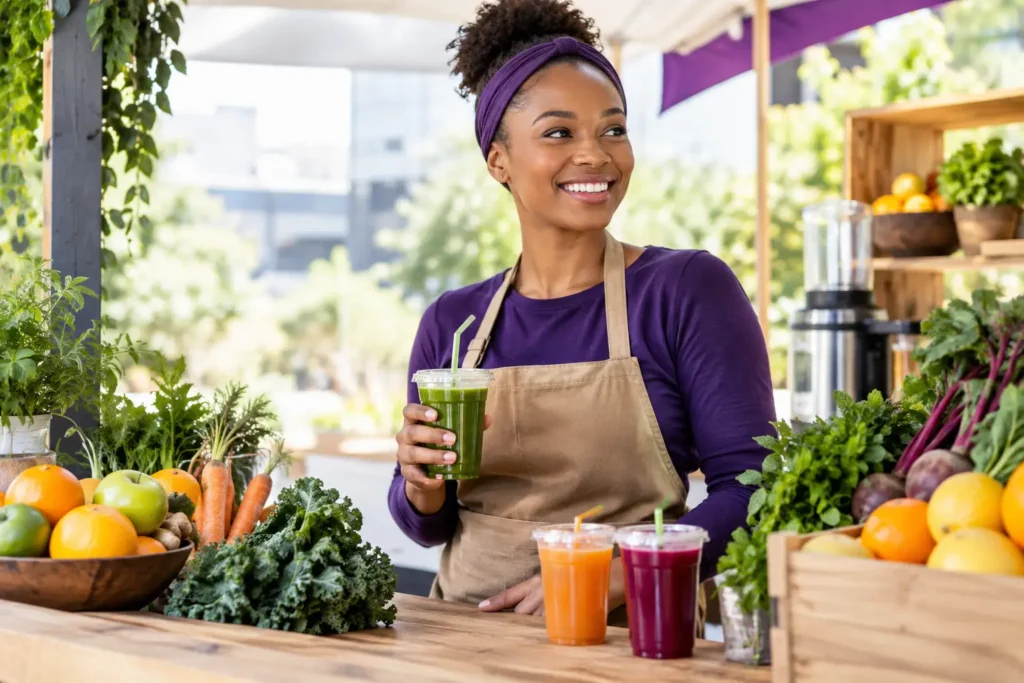
A great juice pop-up is not simply a table, a blender, and a line of curious customers. It is a live introduction to your professional point of view. This juice pop up business guide is designed for wellness professionals who want to bring therapeutic juicing education into their communities with clarity, care, and a business model that can grow thoughtfully.
Pop-ups can be an accessible way to test demand, refine your message, meet future clients, and build local recognition. They also require preparation. The strongest events balance vibrant hospitality with food safety, realistic operations, ethical communication, and a clear next step for each person you serve.
Start With a Clear Purpose for Your Juice Pop-Up Business
Before choosing a market or designing a menu, decide what the pop-up is meant to accomplish. A single event can create awareness, generate consultations, introduce a workshop, validate a product concept, or support a future juice bar or coaching practice. Trying to do all of these at once can make your setup confusing.
For a wellness professional, the most valuable objective is often relationship-building. A thoughtfully prepared juice can start a conversation about everyday habits, produce variety, hydration, and practical ways to include more plant foods in a balanced lifestyle. It can also show prospective clients that you are organized, knowledgeable, and genuinely interested in their goals.
Choose one primary goal and one measurable indicator. If your goal is building a workshop audience, measure qualified email sign-ups rather than total cups sold. If you are testing a menu concept, track which flavor profiles people choose, what they ask about, and whether they would purchase again. Revenue matters, but early-stage learning is equally valuable.
Choose a Venue That Matches Your Audience
The right venue is less about the largest crowd and more about relevance. A farmers market may offer strong alignment with fresh produce and local food culture. A yoga studio, fitness center, wellness fair, workplace event, or community gathering may provide a more focused opportunity to meet people who value health education.
Ask practical questions before committing: Who attends? How long do they stay? Are vendors offering comparable products? Is electricity available? What is the weather backup plan? Does the venue provide water, handwashing access, refrigeration, or waste removal?
A high-traffic setting can be valuable, but it may not suit a conversation-centered service model. At a busy festival, a fast, limited menu may be appropriate. At a wellness studio open house, you may have more space to explain your approach and invite guests to a future class. The format should serve the setting, not the other way around.
Confirm Permits, Insurance, and Food Safety Requirements
Juice service is regulated locally, and requirements vary significantly by city, county, and state. Contact the relevant health department and event organizer well ahead of time to understand permits, food-handler training, handwashing requirements, ingredient labeling, temperature control, and approved preparation locations.
Some jurisdictions place strict limits on preparing fresh juice off-site or serving unpasteurized beverages. Others may require a licensed commissary kitchen, a temporary food permit, or specific equipment. Never assume that a permit held by the venue covers your business.
Appropriate business insurance and clear recordkeeping are part of operating professionally. Build compliance costs into your pricing from the beginning. A pop-up that looks polished but overlooks basic safety procedures can damage trust quickly.
Build a Small Menu You Can Execute Well
A compact menu gives you control over quality, speed, and inventory. Begin with two or three juices that are distinct in flavor and appearance, plus water or another permitted non-juice option. For example, you might offer a bright green juice, a citrus-forward juice, and a naturally sweeter root-and-fruit blend.
Each recipe should be tested for yield, cost, preparation time, ingredient availability, and consistency. A beautiful recipe on paper may be too slow to make during a rush or may create more pulp waste than your pricing can support. Record every test batch so you understand the true cost per serving, including cups, lids, ice, napkins, labels, transport, payment processing, and spoilage.
Use simple, accurate descriptions. You can talk about ingredients and everyday wellness routines without making claims that suggest a juice can diagnose, treat, cure, or prevent a condition. If a guest has allergies, dietary restrictions, or health concerns, communicate ingredients transparently and encourage them to consult an appropriate healthcare professional when needed.
Design for Speed Without Losing Warmth
Pop-up service has a rhythm. Guests want to feel welcomed, but they may not be able to wait through a long explanation while others stand in line. Prepare ingredients efficiently, organize the station in the order each task happens, and keep your payment process simple.
A useful setup separates production from conversation. One person can make and hand off drinks while another greets guests, answers basic ingredient questions, and shares the next opportunity to work with you. If you are working alone, simplify further. Pre-batching is only appropriate when permitted and when it can be done safely without compromising quality.
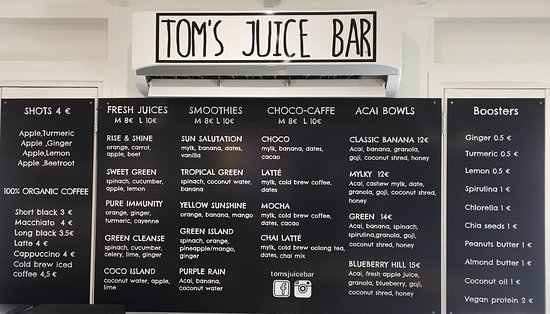
Clear signage does quiet work for you. Display the menu, prices, ingredients, accepted payments, and a short statement of what makes your service different. Your visual identity does not need to be elaborate, but it should be clean, legible, and consistent.
Turn Curiosity Into a Meaningful Next Step
A pop-up becomes a business-building tool when there is a respectful way to stay connected after the cup is empty. Offer one next step that fits your purpose: a free educational resource, a local class, a discovery call, a seasonal workshop, or an invitation to join your email community.
Make the invitation useful rather than pushy. Someone may be interested in learning how to prepare juice at home but not ready for individualized support. Another person may want help creating a sustainable wellness routine. Give people a clear choice and honor their pace.
This is where professional education becomes visible. Rather than presenting yourself as someone who merely sells juice, demonstrate that you can educate responsibly, listen carefully, and translate enthusiasm into practical action. Programs such as the Certified Juice Therapist® training at Juice Guru Institute prepare professionals to pair therapeutic juicing knowledge with coaching and entrepreneurial skills.
Price for Sustainability, Not Applause
Underpricing is common at first-time pop-ups, especially when entrepreneurs want to make healthy options accessible. Accessibility matters, but a price that does not cover ingredients, labor, permits, travel, equipment, taxes, and waste is not sustainable.
Calculate your full event cost, estimate a realistic number of servings, and set a price that supports the quality and care you intend to provide. You may choose a lower-margin event strategically, such as a community fundraiser or a workshop where juice is included with admission. That is different from accidentally subsidizing every sale.
Consider the experience as a whole. A carefully sourced, well-presented drink served by a trained professional has value beyond its ingredient cost. Still, pricing must fit the neighborhood, venue, portion size, and local market. Test, observe, and adjust rather than copying another business’s numbers.
Review Each Event Like a Professional
After the pop-up, set aside time for a brief operational review while details are fresh. Compare expected and actual sales, note the best-selling menu items, count new contacts, and identify moments where service slowed down. Review what guests asked repeatedly. Those questions can shape your future content, workshops, and offers.
Also assess the human side of the event. Did you have enough help? Did your station feel calm? Did the conversations feel aligned with the people you most want to serve? A successful pop-up is not always the one with the longest line. Sometimes it is the event that introduces you to five ideal clients, reveals a needed change in your menu, or gives you confidence to host the next event with greater precision.
Each well-run pop-up is a small public commitment to the standard of care you want your business to represent. Show up prepared, serve with integrity, and let every conversation become an invitation for your community to see what informed, practical wellness education can look like.