A memorable workshop is not built around the loudest blender or the most colorful photo. It is built around a room full of people who leave knowing what to do next. Learning how to host a juicing workshop gives wellness professionals a practical way to educate their communities, demonstrate their expertise, and create a meaningful first experience with their work.
For a health coach, yoga teacher, juice bar owner, or aspiring therapeutic juicing professional, a workshop can become more than a one-time event. It can introduce your teaching style, clarify your professional focus, and help people see that juicing can be a thoughtful part of a broader wellness routine. The difference between a casual tasting and a credible educational experience is preparation.
Start With One Clear Workshop Outcome
Before selecting produce or reserving a venue, decide what participants should understand, practice, or feel by the end of the session. A workshop that tries to cover every ingredient, appliance, and wellness goal usually leaves people inspired but uncertain. A focused session gives them a useful win.
You might teach beginners how to build a balanced green juice they enjoy, show busy professionals how to prepare ingredients efficiently, or guide a small group through the sensory qualities of seasonal produce. Keep the promise modest and specific. For example: participants will learn a simple juicing framework, prepare one recipe safely, and leave with ideas for making fresh juice a more consistent part of their food routine.
This focus also protects your professional boundaries. Educational workshops are an opportunity to discuss general wellness practices, food preparation, and the role of whole-food ingredients. They are not the setting for diagnosing concerns, promising outcomes, or offering individualized medical nutrition guidance. When someone raises a personal health question, respond with care and encourage them to consult an appropriate licensed health professional when needed.
Choose a Format That Fits Your Audience
The best format depends on your audience, budget, venue, and business stage. An intimate, hands-on class for eight people creates plenty of interaction but requires more equipment, prep, and cleanup. A demonstration for 20 to 30 attendees is easier to manage and can work well for community centers, studios, workplace wellness programs, and retail partnerships.
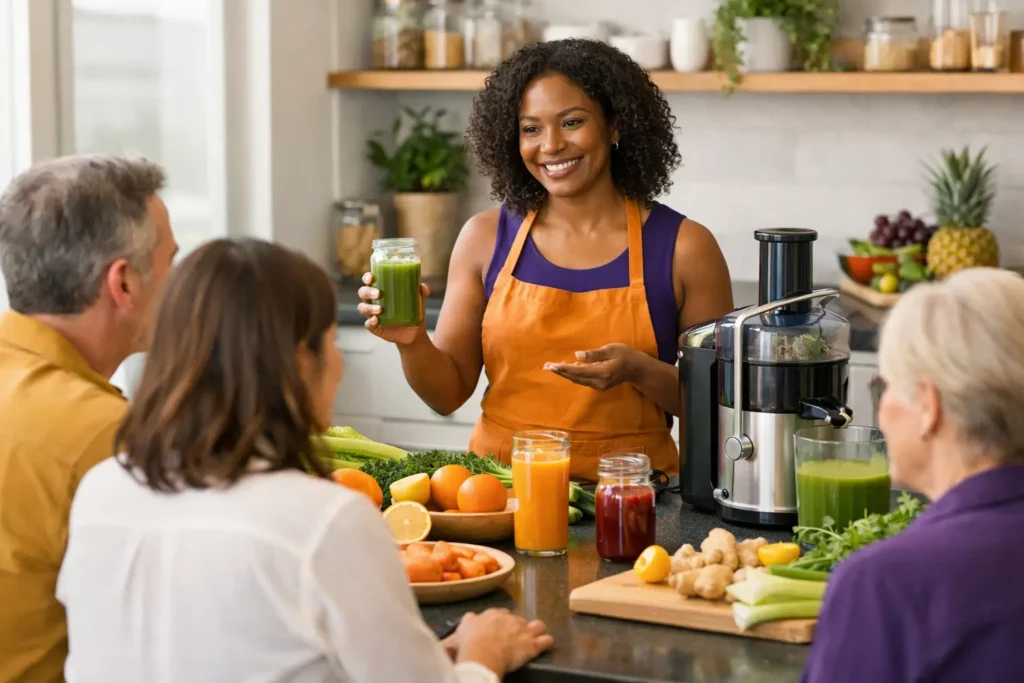
A useful middle ground is a demonstration with guided participation. You prepare the juices at a central station, invite volunteers to help wash or sort produce, and provide small tasting portions. Participants still receive a sensory, practical experience without the delays and safety concerns of several people operating equipment at once.
If you are hosting your first event, choose a format you can execute calmly. Professional confidence grows through repetition. A well-run class for 10 people is more valuable than an overextended event where the teaching gets lost in logistics.
Set a realistic time frame
Ninety minutes is often enough for a welcoming introduction, an educational segment, a demonstration, tasting, questions, and a clear close. A 60-minute lunch-and-learn may be better for a corporate audience, while a two-hour hands-on class allows more time for participant practice.
Build in transition time. Produce preparation, equipment setup, serving, and cleaning always take longer than expected. Your audience should experience an organized session, not a rushed one.
Design a Lesson, Not Just a Recipe Demo
Recipes attract attention, but teaching creates value. Structure your workshop around a few principles participants can reuse at home rather than presenting a collection of disconnected drinks.
Begin by explaining your approach to ingredient selection. Discuss flavor balance, such as pairing leafy greens with refreshing vegetables, herbs, citrus, or a modest amount of fruit. Explain how seasonality, freshness, and personal preference influence what goes into the glass. Avoid presenting one recipe as universally right. A person who enjoys the flavor and can make the juice consistently is more likely to build a sustainable habit.
Then show the process from start to finish: washing produce, preparing it for the juicer, operating equipment according to manufacturer guidance, and cleaning promptly. These details may seem basic, but they are often what prevent a promising new habit from becoming inconvenient after one attempt.
Consider using a simple teaching sequence:
- Introduce the day’s produce and its flavor role.
- Demonstrate safe preparation and juicing techniques.
- Invite participants to taste slowly and describe what they notice.
- Discuss practical ways to use the method at home.
Tasting is an educational tool, not an afterthought. Ask attendees what they notice first: sweetness, brightness, earthiness, bitterness, or aroma. This helps people develop confidence in adapting recipes rather than relying on rigid instructions.
Plan Food Safety and Logistics With Care
Your credibility is visible in the details. Purchase produce from reputable sources, wash it thoroughly, keep perishable ingredients at safe temperatures, and use clean equipment and serving materials. Review local requirements for food sampling, temporary food service, permits, insurance, and venue rules before promoting the event. Requirements vary by location and by the type of food service involved.
Create a prep list several days in advance. Include produce quantities, ice if needed, compost or waste containers, gloves when appropriate, sanitizing supplies, towels, cutting boards, knives, cups, labels, extension cords, and a backup plan for equipment. Test the juicer before the event and bring any parts or tools that are easy to misplace.
Allergy awareness matters as well. Ask registrants about food allergies during registration, label ingredients clearly, and avoid assuming that a recipe is suitable for everyone. If your workshop includes samples, make ingredient lists visible and keep serving areas orderly.
A polished setup does not need to be extravagant. A clean demonstration table, readable ingredient cards, and a well-organized tasting station communicate more professionalism than excessive decorations.
Price and Promote the Experience Honestly
Your price should reflect more than the produce. Account for planning time, shopping, venue fees, travel, supplies, payment processing, marketing, insurance, cleanup, and the value of your education. A free introductory workshop can be appropriate for a strategic partnership or community event, but free should be a deliberate decision rather than a default.
When promoting the workshop, lead with the participant experience. Explain who the event is for, what they will learn, what is included, how long it lasts, and what they should bring. Use language that is welcoming and clear: no prior juicing experience required, practical techniques, guided tasting, and general wellness education.
Avoid overstating health outcomes. Trust is built when your message matches what you deliver. A credible workshop invitation does not need dramatic claims to be compelling. It needs a clear reason for the right people to attend.
Partnerships can help expand your reach. Consider aligned venues such as yoga studios, community education programs, wellness centers, independent markets, or workplaces. Bring a concise proposal that explains the workshop objective, audience, space requirements, and how the host organization benefits. A partner is more likely to say yes when the event feels organized, relevant, and easy to support.
Lead the Room Like an Educator
Arrive early enough to set up without pressure. Welcome participants by name when possible, explain the flow of the session, and let them know when questions will be invited. These small signals create psychological safety, especially for attendees who may feel intimidated by unfamiliar ingredients or equipment.
Teach with confidence, but do not perform certainty where nuance is needed. If someone asks whether a specific juice is right for their individual circumstances, acknowledge that needs vary. Offer general education within your scope and direct personal clinical questions to an appropriate qualified provider.
Keep your language accessible. Explain technical terms when they add value, and connect information to everyday decisions: what to buy, how to store it, how to make a juice taste enjoyable, and how to reduce waste. People remember instruction they can apply on a busy Tuesday morning.
Invite questions throughout, but protect the agenda. A helpful phrase is, “That is a thoughtful question. Let’s address it during our discussion portion so everyone can complete the demonstration first.” This keeps the experience generous and well-paced.
Create a Thoughtful Next Step
The close of the workshop should feel useful, not pressured. Give participants a simple takeaway, such as a recipe card, produce-prep checklist, or a one-week practice prompt. Encourage them to choose one action that feels realistic, whether that is buying one new vegetable, making juice once a week, or practicing a favorite recipe.
For professionals building a wellness business, this is also the moment to invite continued connection in an ethical, relevant way. You may share future workshop dates, coaching services within your scope, or educational opportunities that deepen their knowledge. Juice Guru Institute prepares professionals to approach this work with evidence-informed education, practical business skills, and a commitment to serving clients responsibly.
After the event, send a brief follow-up while the experience is fresh. Thank attendees, share the promised materials, and ask one or two questions about what they enjoyed and what they would like to learn next. Their responses will improve your next workshop and reveal the topics your community genuinely needs.
A juicing workshop is a chance to lead with skill, care, and clarity. When participants leave feeling welcomed, capable, and respected, you have done more than serve a fresh juice. You have created the foundation for lasting trust in your work.